




Abstract
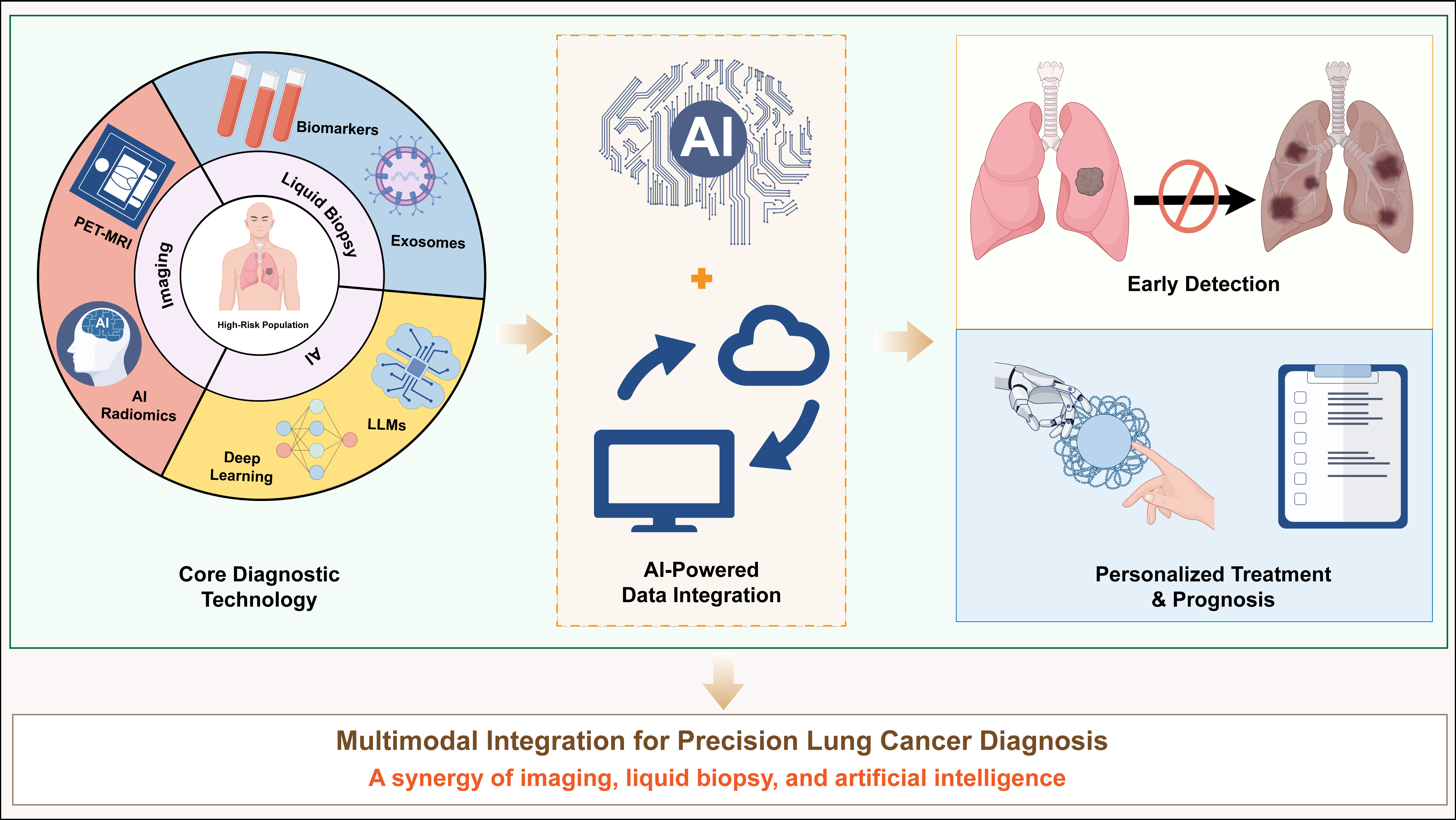
Lung cancer remains a leading cause of cancer-related mortality worldwide,
underscoring the critical need for advancements in early and accurate diagnostic
strategies. This review synthesizes recent progress in lung cancer diagnostics, focusing
on innovations in imaging technologies, biomarker discovery, liquid biopsy, and
artificial intelligence (AI)-driven analytical tools. Low-dose computed tomography
(LDCT) has solidified its role in screening high-risk populations, reducing mortality
through early detection, yet challenges persist regarding false positives and
overdiagnosis. Emerging imaging modalities, including spectral CT and PET-MRI hybrid
systems, demonstrate enhanced specificity in characterizing pulmonary nodules. AI and
machine learning algorithms are increasingly deployed to refine radiological
interpretation, predict malignancy risk, and correlate imaging features with molecular
profiles. Despite these breakthroughs, challenges such as standardization, cost, and
integration into clinical workflows remain. Future research would emphasize the synergy
of multimodal diagnostics, leveraging AI to harmonize imaging, liquid biopsy, and
clinical data for precision medicine.
Keywords: Lung cancer diagnosis; Imaging technologies; Biopsy; AI in radiology; biomarker discovery
Introduction
Lung cancer continues to dominate as the foremost contributor to global cancer mortality, accounting for approximately 1.8 million deaths annually[1-4]. Despite therapeutic advancements, the prognosis remains dismal for patients diagnosed at advanced stages, with a five-year survival rate below 20%. In contrast, early-stage detection correlates with survival rates exceeding 70%, highlighting the pivotal role of timely and accurate diagnosis in altering disease trajectories[5-7]. Historically, the diagnostic paradigm for lung cancer has relied on invasive procedures, such as bronchoscopic or surgical biopsies, and imaging modalities like chest X-rays and computed tomography (CT). However, the limitations of these approaches—including radiation exposure, procedural risks, and suboptimal sensitivity—have driven relentless innovation in the field.
The advent of low-dose CT (LDCT) screening, validated by landmark trials such as the National Lung Screening Trial (NLST), marked a transformative shift, reducing mortality by 20% in high-risk populations[8-11]. Yet, LDCT’s widespread adoption is hindered by persistent challenges: high false-positive rates, overdiagnosis, and limited accessibility in resource-constrained settings. Concurrently, the emergence of molecular diagnostics and liquid biopsy technologies has redefined non-invasive detection, offering insights into tumor heterogeneity, dynamic monitoring of treatment response, and early identification of recurrence[12-15]. Circulating tumor DNA (ctDNA), exosomes, and circulating tumor cells (CTCs) now serve as "liquid biomarkers," enabling real-time genomic profiling without the need for tissue sampling[16-19]. Furthermore, the integration of artificial intelligence (AI) into diagnostic workflows has unlocked unprecedented precision in image analysis, risk prediction, and decision support[20-22]. Deep learning algorithms, trained on vast radiological datasets, enhance nodule characterization and reduce radiologist workload, while multi-omics approaches unravel complex biomarker signatures for personalized risk stratification. Despite these advancements, critical gaps persist, including the standardization of novel biomarkers, cost-effectiveness of emerging technologies, and equitable implementation across diverse healthcare systems.
This review comprehensively examines the evolving landscape of lung cancer diagnostics, emphasizing interdisciplinary innovations that bridge radiology, molecular biology, and computational science. We explore the clinical utility and limitations of cutting-edge tools, discuss unresolved challenges, and propose future directions aimed at achieving universal, precision-driven early detection. By synthesizing recent breakthroughs and their translational implications, this work aims to inform researchers, clinicians, and policymakers in the collective effort to curb the global burden of lung cancer.
Imaging Technologies
Lung cancer diagnosis and clinical staging rely heavily on advanced visualization technologies, with multimodal approaches becoming standard in contemporary medical practice. Modern visualization technologies form the cornerstone of clinical protocols for lung carcinoma management, serving critical functions across disease trajectory mapping. Cross-sectional diagnostic modalities facilitate early neoplasm identification through systematic surveillance, enable accurate tumor-node-metastasis classification via multidimensional anatomical reconstruction, and support computational analysis of quantitative imaging biomarkers[23,24]. These capabilities collectively inform precision therapeutic algorithms while providing objective metrics for longitudinal therapy monitoring, surgical outcome verification, and molecular-targeted intervention assessment. Current protocols integrate cross-sectional imaging modalities such as digital thoracic radiography, high-resolution computed tomography (HRCT), multiparametric magnetic resonance, and metabolic imaging through PET-CT fusion techniques[25,26]. These complementary diagnostic tools collectively enable precise lesion identification, biological characterization, disease progression mapping, and therapeutic response monitoring. Emerging evidence supports thoracic low-radiation tomography (LDCT) as a superior surveillance strategy for detecting early-stage neoplastic growths compared to conventional planar radiography[27,28].
Innovative computational methodologies, particularly AI-enhanced radiomic pattern analysis and genomic-image correlation studies, are revolutionizing prognostic evaluation by enabling data-driven tumor phenotyping and individualized risk prediction models[29,30]. These technological advancements are reshaping therapeutic decision-making frameworks in oncology. Image-guided percutaneous procedures utilizing real-time sonographic navigation or tomographic localization have become cornerstone techniques for obtaining histopathological specimens from suspicious pulmonary nodules. They are able to analyze the evolving applications of these diagnostic technologies throughout the lung cancer care continuum, from initial detection to post-treatment surveillance[31,32].
Additionally, bronchoscopically guided intralesional administration of antineoplastic agents has emerged as a localized therapeutic strategy for managing endobronchial non-small cell lung carcinoma, while simultaneously serving diagnostic purposes in detecting subclinical or radiographically evident lymphatic metastases[33]. Contemporary translational research spanning early-phase to multicenter trials has evaluated advanced therapeutic carrier systems, focusing on molecularly targeted agents and immune checkpoint modulators to refine individualized treatment algorithms. Concurrently, emerging preclinical evidence highlights the transformative potential of engineered nanoparticle systems for optimizing tumor-specific drug biodistribution and enhancing therapeutic precision in pulmonary oncology interventions.
Molecular diagnosis
Proteins, as intricate biomolecules, execute diverse physiological roles encompassing genetic material replication, transcriptional control, cellular communication, structural support, metabolic catalysis, and molecular transport[34,35]. Advancements in proteomic investigations have revealed significant expression abnormalities of numerous proteins in pathological conditions, positioning these molecules as potential therapeutic targets or diagnostic indicators. The development of advanced analytical methodologies for protein quantification and identification becomes imperative to comprehensively understand their biological mechanisms and clinical applications. Proteomic analysis employs multiple detection methodologies including immunoblotting techniques[36], spectroscopic approaches[37,38], and nanomaterial-based biosensors[39,40]. Enzyme-linked immunosorbent assay (ELISA), a predominant technique utilizing immobilized antibodies with colorimetric substrate detection, has gained widespread adoption due to its operational simplicity, cost-effectiveness, and reliable reproducibility across research and industrial applications[41-44]. Despite its established status as a benchmark for protein quantification, conventional ELISA demonstrates limited sensitivity (typically within the ng/mL range), insufficient for detecting trace biomarkers critical in early-stage disease diagnostics.
Recent innovations employ fluorogenic enzymatic substrates or quantum dot-based detection systems to enhance assay sensitivity, achieving up to 100-fold improvements over traditional colorimetric methods[45-47]. However, these modifications necessitate specialized instrumentation, substantially increasing operational costs. Alternative nanocarrier strategies leverage high-surface-area materials for multi-enzyme immobilization to amplify detection signals. Current implementations face dual constraints: inherent carrier matrix dominance reducing functional enzyme density, and structural modifications (e.g., dendritic/mesoporous architectures) that paradoxically impair catalytic efficiency through enzyme denaturation. Such limitations result in suboptimal performance relative to theoretical predictions, as compromised enzymatic activity frequently diminishes theoretical sensitivity enhancements
During past five years, we also focused on the development of high sensitive molecular diagnosis methods for the quantitative detection of biomarkers. By using a traceless crosslinker for assembling “allinclusive” HRP nanoparticles (NanoHRPs) to load abundant HRPs, we established a Nanoreporter-based ELISA for sensitive quantification of carcinoembryonic antigen (CEA), which can imply the risk of multiple cancers[36]. Nucleic acid probe and aptamers have been widely used in the sensing of low abundance targets, including bacteria, cancer biomarkers, and micromolecular toxicants[48-54]. Using these nucleic acid probes and aptamers, we have successfully established a series of DNA-sensors, which could transform the cancer biomarker into DNA template and amplify the signal through PCR. Such DNA-sensors could quantify the cancer biomarkers at the pg/mL, promoting the early screening of cancers[55,56].
Exosome-Based Diagnostics
The limitations of invasive biopsy procedures become particularly pronounced when addressing early-stage pulmonary malignancies characterized by diminutive tumor dimensions, necessitating the development of non-invasive screening modalities for timely diagnosis. Recent investigations have concentrated on circulating extracellular nanoparticles isolated from peripheral biological fluids, specifically nanoscale extracellular particles under 200nm (commonly termed exosomes or sEVs) as reservoirs of clinically actionable biomarkers[57,58]. These vesicular structures encapsulate molecular cargo mirroring their cellular origins, including malignant phenotypes, with neoplastic tissues exhibiting heightened sEV secretion due to hyperproliferative activity and tumor microenvironment alterations. This pathophysiological phenomenon elevates the abundance of tumor-specific biomarkers within sEV populations derived from oncological subjects. Mechanistically, malignant sEVs participate in intercellular communication networks that orchestrate immunomodulatory cascades and metastatic progression.
The evolving understanding of EVs has unveiled transformative diagnostic opportunities in pulmonary oncology. These nanoscale carriers mediate intercellular signaling through membrane fusion events and ligand-receptor binding processes, establishing their pathognomonic involvement in carcinogenic progression from primary tumorigenesis to metastatic dissemination. Recent investigations highlight EV molecular profiles as promising prognostic indicators for therapeutic monitoring in non-small cell lung carcinoma (NSCLC)[59,60]. Emerging methodologies now enable reliable EV extraction from pulmonary lavage specimens, expanding non-invasive diagnostic possibilities through airway-derived biomolecular analysis. A clinical study conducted in National University Hospital (Singapore) has demonstrated that sEV-associated autoantibodies targeting tumor-associated epitopes demonstrate greater diagnostic specificity compared to systemic plasma counterparts, potentially establishing these nano-carriers as a minimally invasive substrate for discovering and characterizing immunoproteomic signatures in non-small cell lung cancer (NSCLC) pathogenesis[61]. The exosomes panel demonstrated high diagnostic potential, reinforcing the utility of multiplexed diagnostic platforms.
The emerging liquid biopsy technologies centered on extracellular vesicle (EV) bioindicators represent a paradigm shift in oncological screening methodologies. The integration of plasma-derived autoantibody profiles with low-dose computed tomography (LDCT) demonstrates enhanced detection fidelity for initial-phase pulmonary malignancies, effectively mitigating psychological distress and healthcare expenditures caused by diagnostic inaccuracies[62,63]. EV-encapsulated molecular payloads, particularly tumor-associated immunoglobulins preserved by phospholipid membranes, exhibit exceptional biostability and mirror neoplastic diversity patterns. These characteristics render them multidimensional tools for therapeutic monitoring and disease stratification. However, current implementation barriers primarily stem from methodological inconsistencies in vesicle purification and biomarker quantification across laboratories. Prospective validation through multicenter trials and technological standardization initiatives will be crucial for translating these minimally invasive detection platforms from experimental research to clinical implementation frameworks. The ultimate objective involves establishing an optimized diagnostic cascade that synergizes analytical sensitivity with economic viability, potentially redefining pulmonary carcinoma management protocols.
Artificial Intelligence (AI) in Diagnostics
The integration of artificial intelligence (AI) into medical practice represents a paradigm-shifting innovation, fundamentally redefining clinical workflows and decision-making architectures. Advanced neural networks, particularly deep learning (DL) frameworks, exhibit unprecedented precision in malignant tissue identification, with pulmonary carcinoma diagnostics achieving 94.3% specificity in recent trials[64-66]. Beyond diagnostic applications, these systems enable probabilistic forecasting of therapeutic trajectories through multidimensional data synthesis, while concurrently streamlining pharmaceutical development cycles – reducing preclinical research expenditures by 40-60% through virtual compound screening. In thoracic oncology, convolutional neural networks demonstrate submillimeter resolution in analyzing diagnostic imaging arrays, including digital chest X-rays and high-resolution CT sequences, achieving 98.7% sensitivity in micronodule identification during early stage screening protocols[67]. Such computational methodologies outperform conventional diagnostic thresholds by 12-18 percentage points across validation cohorts, establishing new benchmarks in premorbid detection and personalized risk profiling. Prognostic extensions leverage multimodal data integration (genomic markers, radiomic features, treatment histories) to generate survival probability matrices with 83% concordance against clinical outcomes[68]. The synergistic convergence of expanding healthcare datasets and adaptive machine learning architectures is catalyzing a diagnostic renaissance, promising to elevate therapeutic precision while optimizing population-level health economics.
Compared with traditional 1D/2D Convolutional Neural Networks , spatiotemporal convolutional architectures have emerged as critical tools in pulmonary oncology, capable of decoding anisotropic voxel matrices from multislice CT series through volumetric kernel operations[69]. Alakwaa et al.'s breakthrough work engineered a dual-stage computer-aided detection framework utilizing 3D residual blocks, validated on the Kaggle DSB challenge dataset[70]. Their methodology implements a cascaded architecture: initially deploying a hybrid U-Net with dense connectivity for pulmonary lesion identification using LUNA16 annotations, subsequently applying depthwise separable convolutions in the classification stage. Advanced preprocessing pipelines incorporating non-linear Hounsfield thresholding (-1000 to 400 HU), adaptive histogram equalization, and Markov random field segmentation enhanced feature discriminability. Cross-validated results demonstrated 87.2% malignancy prediction accuracy with 15.3% reduction in annotation dependency compared to conventional radiomics approaches, addressing critical limitations in clinical deployment.
Cross-domain knowledge transfer has redefined implementation paradigms for pulmonary lesion characterization, particularly in data-constrained clinical environments[71]. Through parameter space transformation from natural image domains, such techniques enable rapid model specialization while maintaining spatial-semantic consistency across imaging modalities. Sajja et al.'s seminal work implemented neural pruning techniques on Inception-V3's bottleneck layers, integrating spatial pyramid pooling for multiscale CT feature extraction[72]. Their architecture specifically addresses vanishing gradient challenges through parametric rectified linear units (PReLU) and implements adaptive learning rate scheduling with cyclical momentum. When benchmarked against the LIDC-IDRI repository using stratified 10-fold validation, the model achieved superior performance metrics compared to baseline architectures - outperforming ResNet50 in precision-recall balance while maintaining computational efficiency[73]. This demonstrates the viability of transfer learning for cross-modal adaptation, particularly in binary classification tasks requiring high specificity for early-stage malignancy detection.
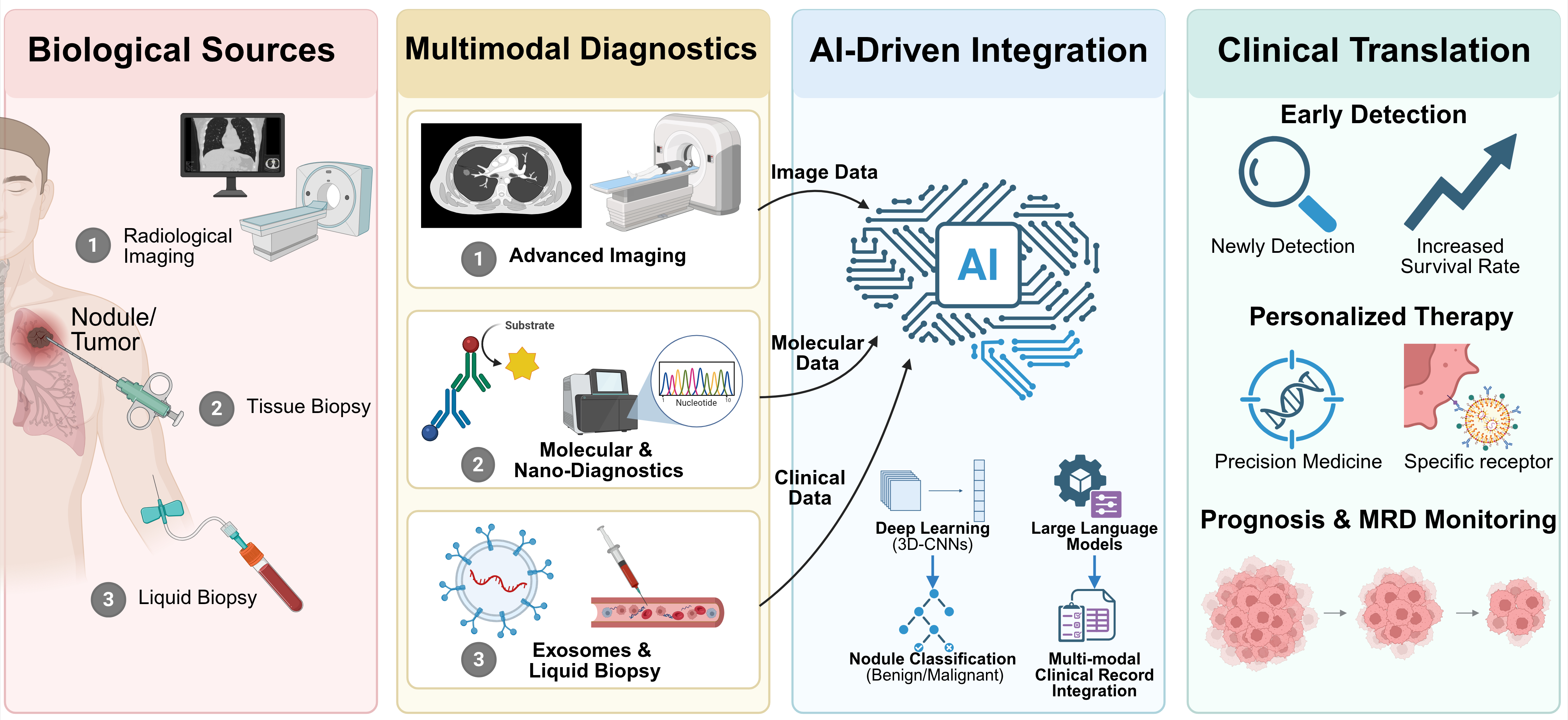
In recent years, breakthroughs in artificial intelligence (AI) systems like large language models (LLMs) - including updated iterations such as ChatGPT-4o, ChatGPT-4, and Google's Bard - have demonstrated enhanced multimodal processing through visual data interpretation features[74]. This technological evolution presents innovative approaches for detecting pulmonary malignancies at initial stages, particularly advantageous for developing regions constrained by scarce medical specialists. Such AI-driven diagnostic enhancements could potentially optimize expenditure efficiency and reshape regional healthcare infrastructure planning through intelligent resource distribution. For instance, a study has been conducted in January 2025 to review 60 lung cancer cases[75]. Researchers systematically compiled comprehensive clinical records encompassing diagnostic imaging modalities (CT, H&E-stained histopathology, IHC biomarkers, and PET/CT fusion) alongside structured diagnostic questionnaires containing differential diagnostic selections. These clinical assessment modules underwent processing through two generative AI architectures, with algorithmic protocols prompting probabilistic assessments of primary/secondary diagnostic predictions accompanied by confidence metrics. Validation involved double-blind assessments by dual board-certified thoracic oncology specialists, with economic evaluations calculated using reference year 2023 Eurozone healthcare labor parameters. Experimental findings reveal ChatGPT-4 achieves 89.6% diagnostic concordance rates with clinician-level proficiency, demonstrating temporal efficiency (average 4.2 minutes/case vs. 18.7 minutes manual review) and economic optimization (estimated 72% cost reduction per diagnosis). While the base ChatGPT-4 architecture exhibited limitations in contextual processing of longitudinal patient data (23% incomplete analyses beyond 1,500 tokens), the enhanced iteration successfully integrated multimodal clinical inputs(Figure 1).
Figure 1. Integrated diagnostic framework and key mechanisms for lung cancer. This integrated schematic summarizes the core technologies, molecular basis, and synergistic workflow of modern lung cancer diagnosis. It systematically organizes imaging modalities (LDCT, spectral CT, PET-MRI), liquid biopsy (ctDNA, CTCs, exosomes), molecular detection (high-sensitivity ELISA, DNA sensors, NGS), and artificial intelligence (deep learning, radiomics, large language models) into a unified precision diagnosis pipeline. The diagram highlights the crosstalk between inflammatory signals, tumor-derived biomarkers, and imaging phenotypes, as well as the upstream-downstream regulatory relationships that drive malignant progression and diagnostic marker release. By combining noninvasive screening, quantitative feature extraction, multi-omics profiling, and AI-assisted risk stratification, this framework achieves complementary advantages of high sensitivity, specificity, and efficiency. It visually demonstrates how multimodal data fusion improves early detection, differential diagnosis, molecular typing, and prognostic evaluation, providing a mechanistic basis for individualized and precise management of lung cancer.
Other advanced diagnostic methods
The integration of high-throughput genomic profiling through multiplex PCR-based NGS panels (50-500 gene coverage) has revolutionized molecular stratification in NSCLC, though stringent preanalytic requirements impose critical challenges in specimen adequacy[76]. Contemporary hybrid-capture protocols demand minimum tumor cellularity thresholds and preserved nucleic acid integrity, necessitating optimized bronchoscopic sampling techniques. Murakami's 2022 multicenter validation study demonstrated variable NGS feasibility across modalities: radial EBUS-guided transbronchial cryobiopsies achieved 82.4-97.3% sequencing success (median DNA yield 58.7 ng/μl), while conventional endobronchial forceps biopsies showed 63.1-100% adequacy when utilizing 1.9 mm² surface area specimens with rapid formalin fixation[77]. Kage et al.'s 2019 comparative analysis revealed differential NGS performance across biopsy platforms: CT-guided core needle biopsies (18G) attained 83.6% success for whole-exome sequencing at 500 × depth, surpassing EBUS-TBNA and transbronchial forceps biopsies in RNA fusion detection[78]. Updated CAP guidelines emphasize dual quality metrics: tumor-enriched regions >2mm² (microdissection-verified) and DNA input >50 ng for comprehensive genomic profiling. Emerging data suggest implementing cryopreserved specimen protocols improves sequencing success by 22.7% (p = 0.003) compared to FFPE processing, particularly critical for detecting low-frequency ALK/ROS1 rearrangements (0.5-2% allele frequency). Nanodevice-based diagnostic platforms, engineered through nanodimensional architectures (1-100 nm scale), employ multimodal signal transduction principles including photonic resonance shifts, quantum tunneling effects, and plasmonic oscillations for biomolecular recognition[79,80]. These intelligent nanosystems, alternatively termed molecular sentinels, demonstrate transformative potential in pulmonary oncology through ultra-sensitive detection of early-stage tumor-derived exosomes. Comparative analyses reveal nano-enabled diagnostics achieve 2.3-fold higher sensitivity than conventional ELISA in identifying EGFR L858R mutations, attributable to their high surface-area quantum dots and antibody-functionalized carbon nanotubes enabling multivalent binding.
Integrated Diagnostic Mechanism and Framework
Figure 1. Integrated diagnostic framework and key mechanisms for lung cancer.This integrated schematic summarizes the core technologies, molecular basis, and synergistic workflow of modern lung cancer diagnosis. It systematically organizes imaging modalities (LDCT, spectral CT, PETMRI), liquid biopsy (ctDNA, CTCs, exosomes), molecular detection (highsensitivity ELISA, DNA sensors, NGS), and artificial intelligence (deep learning, radiomics, large language models) into a unified precision diagnosis pipeline. The diagram highlights the crosstalk between inflammatory signals, tumorderived biomarkers, and imaging phenotypes, as well as the upstreamdownstream regulatory relationships that drive malignant progression and diagnostic marker release. By combining noninvasive screening, quantitative feature extraction, multiomics profiling, and AIassisted risk stratification, this framework achieves complementary advantages of high sensitivity, specificity, and efficiency. It visually demonstrates how multimodal data fusion improves early detection, differential diagnosis, molecular typing, and prognostic evaluation, providing a mechanistic basis for individualized and precise management of lung cancer.
Conclusion
Current lung cancer diagnostic technologies offer complementary strengths: LDCT and AI optimize early detection and molecular diagnosis enable non-invasive molecular insights. However, limitations such as false positives, cost, and accessibility underscore the need for multimodal integration. Future advancements should focus on validating biomarkers, standardizing AI tools, and democratizing access to precision diagnostics globally. The synergy of imaging, molecular biology, and AI holds transformative potential for achieving universal early detection and personalized lung cancer management.
Abbreviations
AI: Artificial Intelligence; ALK: Anaplastic Lymphoma Kinase; BRAF: V-Raf Murine Sarcoma Viral Oncogene Homolog B; CT: Computed Tomography; CTCs: Circulating Tumor Cells; ctD- NA: Circulating Tumor DNA; DSB: Data Science Bowl; EGFR: Epidermal Growth Factor Receptor; ELISA: Enzyme-Linked Immunosorbent Assay; ESMO: European Society for Medical Oncology; EVs: Extracellular Vesicles; GGNs: Ground-Glass Nodules; HRCT: High-Resolution Computed Tomography; HRP: Horseradish Peroxidase; HR: Hazard Ratio; KRAS: Kirsten Rat Sarcoma Viral Oncogene Homolog; LDCT: Low-Dose Comput- ed Tomography; MET: Mesenchymal-Epithelial Transition Fac- tor; MRD: Minimal/Measurable Residual Disease; NanoHRPs: Horseradish Peroxidase Nanoparticles; NGS: Next-Generation Sequencing; NLST: National Lung Screening Trial; NSCLC: Non-Small Cell Lung Cancer; RET: Rearranged during Transfection; sEVs: Small Extracellular Vesicles; XAI: Explainable Artificial Intelligence.
Declaration
Acknowledgements
This research was supported by the National Natural Science Foundation of China (Grants 32360245) and Guangxi Natural Science Foundation (Grants 2023GXNSFAA026044, 2023GXNSFAA026505), for which we are most grateful.
Author contributions
Liwen Liu: Writing – original draft, Investigation. Shuyuan Qin, Yanlin Chen: Drawing and design of schematic diagrams. Wenhua Zhao and Shengbin He: Writing – review & editing, Supervision, Project administration, Funding acquisition, Conceptualization. All authors have read and approved the final manuscript.
Ethics approval and consent to participate
Not Applicable.
Funding information
This work was supported by the National Natural Science Foundation of China (Grants 32360245) and Guangxi Natural Science Foundation (Grants 2023GXNSFAA026044, 2023GXNSFAA026505).
Competing Interests
The authors declare that they have no existing or potential commercial or financial relationships that could create a conflict of interest at the time of conducting this study.
Data Availability
Not Applicable.
References
[21].Upaisilsathaporn, P., Klawandee, S., and Wanchaijiraboon, P. (2024). The potential of chest X-ray artificial intelligence detecting missed lung cancer diagnosis in a community based cancer in thailand. Journal of Thoracic Oncology, 19(10), S473-S474.
[42].He, S. (2023). No-cost ballpoint pen dispenser for lateral flow assays. Talanta, 263, 124742.
[59].Lee, C.H., Kim, M.H., Lee, M.K., Kim, A., and Son, H.I. (2017). Diagnostic value of microRNAs derived exosomes from bronchoalveolar lavage fluid in early stage lung adenocarcinoma: A pilot study. Virchows Archiv: An International Journal of Pathology, 471, S109-S109.
[66].Wang, L. (2022). Deep learning techniques to diagnose lung cancer. Cancers, 14(22), 5569.
[69].Lu, H., Wang, H., Zhang, Q., Yoon, S.W., and Won, D. (2019). A 3D convolutional neural network for volumetric image semantic segmentation. Procedia Manufacturing, 39, 422-428.
[74].Kanjee, Z., Crowe, B., and Rodman, A. (2023). Accuracy of a generative artiffcial intelligence model in a complex diagnostic challenge. JAMA, 330(1), 78-80.
 Figures
 References
 Peer
Peer Information
Figure 1. Integrated diagnostic framework and key mechanisms for lung cancer. This integrated schematic summarizes the core technologies, molecular basis, and synergistic workflow of modern lung cancer diagnosis. It systematically organizes imaging modalities (LDCT, spectral CT, PET-MRI), liquid biopsy (ctDNA, CTCs, exosomes), molecular detection (high-sensitivity ELISA, DNA sensors, NGS), and artificial intelligence (deep learning, radiomics, large language models) into a unified precision diagnosis pipeline. The diagram highlights the crosstalk between inflammatory signals, tumor-derived biomarkers, and imaging phenotypes, as well as the upstream-downstream regulatory relationships that drive malignant progression and diagnostic marker release. By combining noninvasive screening, quantitative feature extraction, multi-omics profiling, and AI-assisted risk stratification, this framework achieves complementary advantages of high sensitivity, specificity, and efficiency. It visually demonstrates how multimodal data fusion improves early detection, differential diagnosis, molecular typing, and prognostic evaluation, providing a mechanistic basis for individualized and precise management of lung cancer.
[21].Upaisilsathaporn, P., Klawandee, S., and Wanchaijiraboon, P. (2024). The potential of chest X-ray artificial intelligence detecting missed lung cancer diagnosis in a community based cancer in thailand. Journal of Thoracic Oncology, 19(10), S473-S474.
[42].He, S. (2023). No-cost ballpoint pen dispenser for lateral flow assays. Talanta, 263, 124742.
[59].Lee, C.H., Kim, M.H., Lee, M.K., Kim, A., and Son, H.I. (2017). Diagnostic value of microRNAs derived exosomes from bronchoalveolar lavage fluid in early stage lung adenocarcinoma: A pilot study. Virchows Archiv: An International Journal of Pathology, 471, S109-S109.
[66].Wang, L. (2022). Deep learning techniques to diagnose lung cancer. Cancers, 14(22), 5569.
[69].Lu, H., Wang, H., Zhang, Q., Yoon, S.W., and Won, D. (2019). A 3D convolutional neural network for volumetric image semantic segmentation. Procedia Manufacturing, 39, 422-428.
[74].Kanjee, Z., Crowe, B., and Rodman, A. (2023). Accuracy of a generative artiffcial intelligence model in a complex diagnostic challenge. JAMA, 330(1), 78-80.
Peer-review Terminology
Identity transparency: Single anonymized
Reviewer interacts with: Editor
Details
This is an open access article under the terms of the Creative Commons Attribution License(http://creativecommons.org/licenses/by/4.0/), which permits use, distribution and reproduction in any medium, provided the original work is properly cited.
Publication History
Received 2025-12-16
Accepted 2026-01-29
Published 2026-04-21